
Introduction
Costa Rica may be a relatively small country, but it packs an astonishing variety of landscapes into its borders. Towering volcanoes, emerald rainforests, pristine beaches, cloud forests, waterfalls, and wildlife-rich national parks all combine to create one of the world’s most exciting travel destinations. While many travelers automatically think of visiting during the dry season, the country’s summer months particularly July and August offer a completely different experience that many seasoned visitors actually prefer.
Summer in Costa Rica falls during the green season, when afternoon showers transform the forests into vibrant jungles and waterfalls surge with life. Instead of endless rain, travelers often experience sunny mornings followed by refreshing tropical showers later in the day. July even brings the famous “Veranillo” or “Little Summer,” a short period of drier weather across much of the Pacific coast, making beach vacations especially enjoyable. Travelers also benefit from lower hotel prices, fewer crowds, incredible wildlife viewing, and lush scenery that simply doesn’t exist during the dry months.
Whether you’re planning a romantic honeymoon, a family vacation, an adventure-filled road trip, or a solo backpacking journey, Costa Rica offers destinations perfectly suited to every travel style. This guide explores the very best places to visit during the summer months while providing practical travel advice to help you experience the country at its absolute best.
Why Costa Rica Is a Perfect Summer Destination
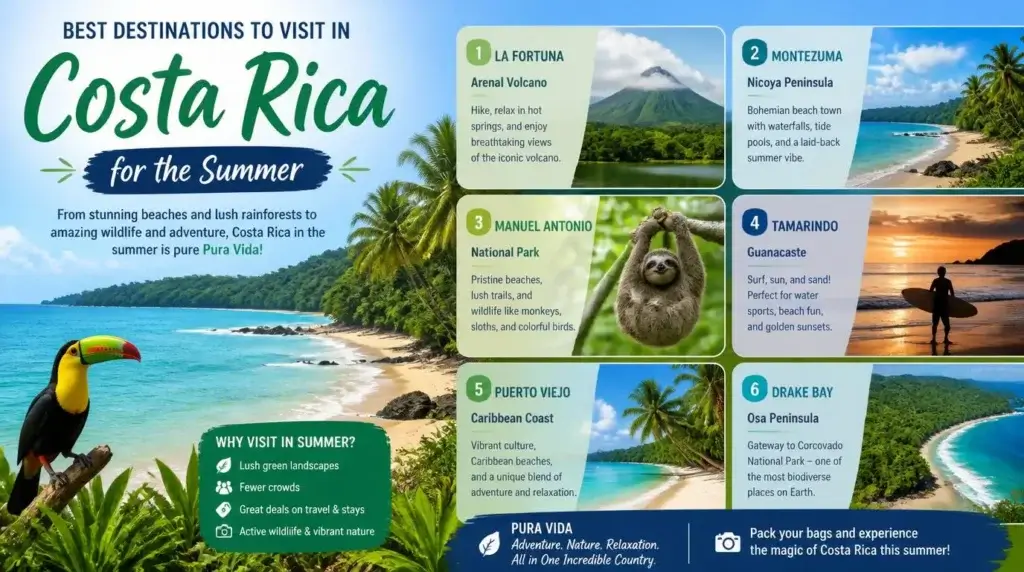
Image Credit: AI Generated
Many travelers hesitate when they hear the words “rainy season.” In Costa Rica, however, that phrase can be misleading. Rain rarely falls all day long. Instead, mornings are often bright and sunny, providing plenty of time for hiking, ziplining, surfing, wildlife tours, and beach adventures before refreshing afternoon showers cool the tropical landscape.
One of the biggest advantages of visiting during summer is the incredible transformation of nature. Waterfalls become dramatically more powerful, rivers fill with crystal-clear water, forests burst into brilliant shades of green, and wildlife becomes remarkably active. Birds sing throughout the morning, monkeys swing through the canopy, frogs emerge after rainfall, and sea turtles begin nesting along several coastlines.
Another major benefit is affordability. Hotels frequently reduce rates during the green season, allowing visitors to enjoy luxury eco-lodges and boutique resorts for considerably less than peak-season prices. Popular attractions are also less crowded, meaning shorter lines, quieter hiking trails, and more personalized guided tours. Local businesses remain fully operational while offering a more relaxed atmosphere than the busy December-to-April tourist season.
Understanding Costa Rica’s Summer Weather
Costa Rica’s summer vacation period, especially July and August, offers surprisingly favorable travel conditions. July often experiences a temporary dry spell called Veranillo de San Juan, bringing several consecutive sunny days across much of the Pacific region. Even during August, rainfall typically arrives in predictable afternoon showers, allowing travelers to comfortably schedule outdoor adventures earlier in the day.
The country’s varied geography also creates numerous microclimates. While one region experiences light rain, another may enjoy sunshine. The Caribbean coast often enjoys excellent weather during July and August, making destinations such as Puerto Viejo particularly attractive for travelers seeking beach vacations with minimal rainfall.
Why the Green Season Is Worth Experiencing
The green season showcases Costa Rica exactly as nature intended. Instead of dusty trails and dry vegetation, visitors encounter flourishing forests filled with orchids, butterflies, colorful birds, and active mammals. Rivers become ideal for whitewater rafting, waterfalls reach their most spectacular flow, and photographers enjoy dramatic cloud formations that create unforgettable landscape images.
Wildlife enthusiasts also benefit tremendously during summer. Sea turtle nesting reaches its peak in places like Tortuguero, humpback whales migrate along portions of the Pacific coastline, and rainforest animals become easier to spot thanks to abundant food and water sources. These natural spectacles make the green season one of Costa Rica’s best-kept travel secrets.
Quick Comparison of the Best Summer Destinations
| Destination | Best For | Top Highlights | Summer Advantage |
|---|---|---|---|
| La Fortuna | Adventure | Volcano, waterfalls, hot springs | Lush scenery and full waterfalls |
| Manuel Antonio | Wildlife | Beaches and national park | Fewer visitors |
| Monteverde | Nature | Cloud forest and ziplining | Beautiful misty forests |
| Tamarindo | Beach lovers | Surfing and nightlife | July dry spell |
| Tortuguero | Wildlife | Sea turtle nesting | Peak nesting season |
La Fortuna and Arenal Volcano
La Fortuna consistently ranks among Costa Rica’s most popular destinations and for good reason. Sitting beneath the majestic Arenal Volcano, this vibrant town offers a remarkable blend of adventure, relaxation, and natural beauty. During the summer months, the surrounding rainforest transforms into a lush paradise where waterfalls thunder through dense jungle and volcanic hot springs provide the perfect escape after a day of exploration.
One of La Fortuna’s greatest strengths is its diversity of activities. Visitors can hike lava trails inside Arenal Volcano National Park, cross suspended bridges high above the rainforest canopy, rappel down waterfalls, enjoy whitewater rafting, or simply soak in naturally heated mineral pools surrounded by tropical gardens. The area’s famous hot springs become especially enjoyable during cooler summer evenings when gentle rainfall adds to the magical atmosphere.
Summer also creates ideal conditions for photographers and wildlife lovers. Sloths, toucans, colorful frogs, monkeys, and countless bird species become more active amid the lush vegetation. Morning hikes often reward visitors with clear volcano views before clouds gradually roll across the landscape later in the day. Despite occasional afternoon showers, most activities continue uninterrupted, making La Fortuna an outstanding destination throughout the summer season. Travelers regularly praise July and August for offering fewer crowds while maintaining excellent tour availability and lower accommodation prices.
Top Things to Do
Visitors should prioritize hiking through Arenal Volcano National Park, swimming beneath the spectacular La Fortuna Waterfall, exploring the Mistico Hanging Bridges, soaking in geothermal hot springs, taking chocolate plantation tours, and experiencing thrilling zipline adventures above the rainforest canopy.
Who Should Visit
La Fortuna is ideal for adventure seekers, honeymooners, photographers, families with older children, wellness travelers, and anyone wanting to experience Costa Rica’s famous combination of volcanoes, rainforests, and natural hot springs in one destination.
Manuel Antonio National Park
Few places in Costa Rica combine wildlife, tropical beaches, and accessible hiking as beautifully as Manuel Antonio National Park. Despite being one of the country’s smallest national parks, it consistently ranks among the most biodiverse protected areas in Central America. Summer visitors often enjoy quieter trails, easier wildlife viewing, and lush rainforest scenery enhanced by seasonal rainfall.
The park’s network of walking trails passes through coastal rainforest before emerging onto breathtaking white-sand beaches bordered by turquoise Pacific waters. Along the way, visitors regularly encounter white-faced capuchin monkeys, squirrel monkeys, sloths, iguanas, toucans, scarlet macaws, and dozens of butterfly species. Because animals remain active throughout the year, summer provides exceptional wildlife viewing opportunities, especially during early morning guided walks.
Beyond the national park itself, the nearby town offers excellent restaurants, boutique hotels, catamaran cruises, paddleboarding, kayaking, and sunset dining overlooking the Pacific Ocean. Afternoon showers rarely diminish the experience, as many travelers simply explore beaches during sunny mornings before relaxing at cafés or spas once tropical rain begins. The combination of wildlife, beaches, accessibility, and excellent tourism infrastructure makes Manuel Antonio one of the finest destinations for first-time visitors discovering Costa Rica during the summer months.
Monteverde Cloud Forest
If La Fortuna showcases Costa Rica’s volcanic beauty, Monteverde Cloud Forest introduces travelers to a completely different world. Perched high in the Tilarán Mountains, Monteverde is famous for its mist-covered forests, incredible biodiversity, and cool mountain climate. During the summer months, the frequent clouds and occasional light rain enhance the magical atmosphere that has made this destination one of the country’s most iconic ecotourism locations. Walking through the cloud forest often feels like stepping into a fantasy novel, where towering trees are draped in moss, orchids bloom from ancient branches, and every trail echoes with the songs of exotic birds.
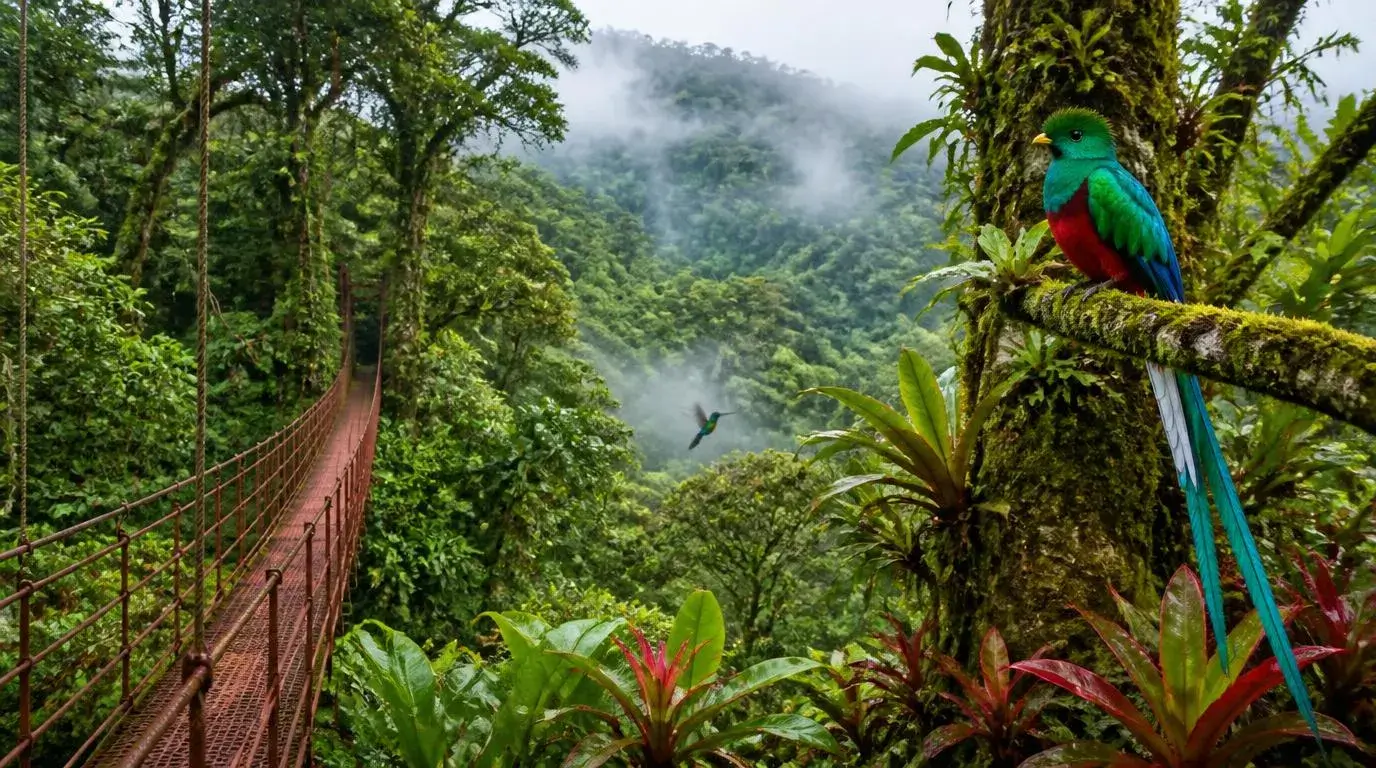
Monteverde is home to thousands of plant species, hundreds of bird species, and countless mammals, reptiles, and amphibians. Birdwatchers travel from around the world hoping to catch a glimpse of the spectacular Resplendent Quetzal, one of Central America’s most colorful birds. Guided nature walks provide fascinating insights into the delicate cloud forest ecosystem, while hanging bridge tours allow visitors to explore the forest canopy from an entirely different perspective. Summer rains help maintain the forest’s lush vegetation, making wildlife sightings especially rewarding.
Adventure lovers will also find plenty to enjoy in Monteverde. The region is renowned for its thrilling zipline courses, many of which rank among the longest and highest in Latin America. Travelers can soar above the forest canopy, cross suspension bridges, or descend into hidden valleys on guided hikes. Coffee plantation tours, butterfly gardens, hummingbird galleries, and reptile exhibits provide excellent alternatives when afternoon showers arrive. Thanks to its cooler temperatures and extraordinary biodiversity, Monteverde remains one of the best destinations to experience Costa Rica’s natural beauty during the summer season.
Adventure Activities
Monteverde offers an exciting mix of outdoor experiences suitable for all ages. Popular activities include:
- Ziplining through the cloud forest canopy
- Walking across hanging bridges
- Night wildlife tours
- Coffee and chocolate farm experiences
- Horseback riding
- Butterfly and hummingbird gardens
Birdwatching Highlights
The cloud forest supports over 400 bird species, making it a paradise for bird enthusiasts. Besides the famous Resplendent Quetzal, visitors frequently spot toucans, emerald toucanets, motmots, hummingbirds, and colorful tanagers throughout the reserve.
Tamarindo
Located on Costa Rica’s northwestern Pacific coast, Tamarindo combines beautiful beaches, world-class surfing, vibrant nightlife, and excellent tourism infrastructure into one unforgettable destination. Summer visitors often benefit from the region’s “Little Summer” weather pattern in July, which typically brings several sunny days despite the overall green season. This makes Tamarindo an ideal choice for travelers seeking a traditional tropical beach vacation without the peak-season crowds.
Surfing is undoubtedly Tamarindo’s biggest attraction. Gentle waves make it an excellent destination for beginners, while nearby beaches provide larger breaks for experienced surfers. Surf schools line the beachfront, offering lessons, board rentals, and guided excursions suitable for every skill level. Even if surfing isn’t your passion, the long golden beach invites visitors to swim, paddleboard, kayak, or simply relax beneath swaying palm trees while enjoying spectacular Pacific sunsets.
The town itself offers a lively atmosphere with restaurants serving fresh seafood, international cuisine, boutique shopping, beach bars, and live music throughout the week. Families appreciate the calm beaches and nearby wildlife refuges, while couples enjoy romantic sunset cruises and beachfront dining experiences. Tamarindo also serves as an excellent base for exploring nearby national parks, volcanic regions, and hidden beaches along the Guanacaste coastline.
Surfing and Nightlife
Tamarindo has earned an international reputation as one of Costa Rica’s premier surfing destinations. Whether you’re taking your first surfing lesson or chasing larger waves nearby, the town offers excellent facilities, experienced instructors, and consistent ocean conditions. After sunset, beach bars, rooftop lounges, and live music venues create a relaxed but energetic nightlife scene.
Family-Friendly Attractions
Families can enjoy dolphin-watching tours, estuary boat safaris, snorkeling trips, wildlife refuges, horseback riding along the beach, and beginner-friendly surf lessons suitable for children and adults alike.
Tortuguero National Park
For wildlife enthusiasts, few places rival the remarkable biodiversity found within Tortuguero National Park. Often called Costa Rica’s “Amazon,” this remote destination is accessible primarily by boat or small aircraft, adding to its adventurous appeal. The park protects one of the country’s most important wetland ecosystems, featuring winding canals, dense rainforest, freshwater lagoons, and untouched Caribbean coastline.
Summer is one of the best times to visit Tortuguero because it coincides with the nesting season of the endangered Green Sea Turtle. From July through October, thousands of turtles emerge from the ocean under the cover of darkness to lay their eggs on protected beaches. Guided nighttime turtle tours provide visitors with an unforgettable opportunity to witness one of nature’s most extraordinary events while supporting responsible conservation efforts.
Beyond sea turtles, Tortuguero boasts incredible wildlife diversity. Boat safaris glide silently through jungle canals where visitors regularly encounter crocodiles, caimans, monkeys, sloths, river otters, toucans, kingfishers, and colorful poison dart frogs. The park’s peaceful waterways create a completely different travel experience compared to Costa Rica’s mountainous regions, allowing travelers to appreciate the country’s extraordinary ecological richness from a unique perspective.
Puerto Viejo de Talamanca
On Costa Rica’s southern Caribbean coast lies Puerto Viejo de Talamanca, a destination that perfectly blends laid-back beach culture with Afro-Caribbean heritage. Unlike the Pacific side, the Caribbean often experiences relatively dry weather during July and August, making summer an excellent time to visit. Palm-lined beaches, turquoise waters, coral reefs, and lush jungle landscapes create an atmosphere unlike anywhere else in the country.
Puerto Viejo is famous for its colorful culture, reggae music, welcoming locals, and exceptional cuisine. Restaurants serve delicious Caribbean-inspired dishes featuring coconut rice, fresh seafood, tropical fruits, and locally grown spices. Travelers can rent bicycles to explore nearby beaches such as Playa Cocles, Punta Uva, and Playa Chiquita, each offering crystal-clear water and excellent opportunities for swimming or snorkeling.
Nature lovers will appreciate the nearby Gandoca-Manzanillo Wildlife Refuge, where rainforest trails reveal monkeys, sloths, toucans, colorful frogs, and countless tropical plants. Surfing, kayaking, paddleboarding, and scuba diving are also popular activities, making Puerto Viejo one of Costa Rica’s most diverse coastal destinations.
Corcovado National Park
Frequently described as one of the most biologically intense places on Earth, Corcovado National Park offers an unforgettable experience for travelers seeking untouched wilderness. Located on the remote Osa Peninsula, this protected rainforest is home to approximately 2.5% of the world’s biodiversity despite covering only a tiny fraction of the planet’s surface. Visiting Corcovado feels like entering a prehistoric world where nature still dominates every aspect of the landscape.
Guided hikes through the rainforest reveal an astonishing variety of wildlife. Visitors may encounter scarlet macaws, tapirs, four species of monkeys, anteaters, sloths, peccaries, crocodiles, and even the elusive jaguar, although sightings remain extremely rare. The dense rainforest, combined with rivers, waterfalls, mangroves, and untouched beaches, creates an ecosystem unlike any other in Costa Rica.
Because of its remote location and protected status, Corcovado is best explored with experienced local guides. Summer’s lush vegetation makes the rainforest especially beautiful, while fewer visitors create a more intimate wildlife experience. Adventurous travelers willing to venture off the beaten path are rewarded with one of the most authentic nature experiences available anywhere in Central America.
Uvita and Marino Ballena National Park
Nestled along Costa Rica’s Southern Pacific Coast, Uvita is one of the country’s most underrated summer destinations. Unlike some of the more developed beach towns, Uvita retains a peaceful atmosphere where lush rainforest meets pristine coastline. Its centerpiece is Marino Ballena National Park, named after the humpback whales that migrate through the area. The park is famous for its naturally formed Whale Tail Sandbar, a unique stretch of sand visible during low tide that resembles the tail of a giant whale when viewed from above.
Summer is one of the most exciting times to visit because it coincides with the arrival of humpback whales from the Southern Hemisphere. Whale-watching tours provide excellent opportunities to observe these gentle giants breaching, tail-slapping, and swimming with their calves. Dolphins are frequently spotted alongside whales, adding even more excitement to boat excursions. Visitors can also enjoy snorkeling, kayaking, paddleboarding, waterfall hikes, and horseback riding through the surrounding countryside.
The beaches around Uvita remain far less crowded than many of Costa Rica’s better-known coastal destinations, making them perfect for travelers seeking relaxation. The nearby Nauyaca Waterfalls, considered among the country’s most spectacular waterfalls, become especially impressive during the green season as rainfall dramatically increases water flow. Whether you’re searching for wildlife encounters, breathtaking scenery, or quiet beaches, Uvita offers an unforgettable Costa Rican experience.
Essential Summer Travel Tips for Costa Rica
Planning your trip carefully can make a tremendous difference when visiting Costa Rica during the summer months. Although the green season brings occasional rainfall, it also rewards travelers with lower prices, greener landscapes, and fewer crowds. The key is simply adjusting your daily schedule to work with the tropical climate rather than against it.
Early mornings are generally the best time for outdoor adventures. Wildlife is most active shortly after sunrise, temperatures remain comfortable, and rainfall is relatively uncommon before early afternoon. Scheduling hikes, wildlife tours, volcano visits, and beach activities during the morning leaves afternoons free for spa visits, museums, coffee tours, shopping, or relaxing at your hotel if showers arrive.
Transportation also deserves careful consideration. While most major highways remain accessible throughout the summer, rural roads may become muddy after heavy rainfall. Renting a four-wheel-drive vehicle is highly recommended if you plan to explore remote destinations such as Corcovado or parts of the Nicoya Peninsula. Travelers relying on public transportation should allow extra travel time, particularly when connecting between different regions.
What to Pack for a Summer Vacation in Costa Rica
Packing smartly will help you stay comfortable regardless of changing weather conditions. Costa Rica’s tropical climate calls for lightweight clothing, but occasional rain showers and cooler mountain temperatures make versatility essential.
| Item | Why You Need It |
|---|---|
| Lightweight clothing | Keeps you cool in tropical temperatures |
| Waterproof rain jacket | Ideal for afternoon showers |
| Hiking shoes | Essential for rainforest trails |
| Sandals | Perfect for beaches and hot springs |
| Reusable water bottle | Stay hydrated while reducing plastic waste |
| Insect repellent | Helpful in rainforest and coastal regions |
| Sunscreen | UV levels remain high year-round |
| Dry bag | Protects electronics during boat trips and rain |
| Swimwear | Needed for beaches, waterfalls, and hot springs |
| Travel adapter | Costa Rica primarily uses Type A and Type B outlets |
Don’t forget binoculars if wildlife viewing is a priority. A lightweight camera with weather protection is also worth bringing, as you’ll likely encounter countless opportunities for unforgettable photographs.
Budget Planning for Your Summer Trip
One of the greatest advantages of visiting Costa Rica during summer is the opportunity to stretch your travel budget. Since the green season falls outside the country’s busiest tourism period, accommodation prices frequently drop by 20–40% compared to peak dry-season rates. Luxury eco-lodges, boutique hotels, and beach resorts often introduce seasonal promotions that make upscale travel considerably more affordable.
Budget travelers can comfortably enjoy Costa Rica by staying in hostels, guesthouses, or locally owned cabins while eating at traditional “sodas,” the country’s small family-run restaurants. Mid-range travelers benefit from discounted hotel packages, while luxury visitors often discover premium accommodations available at surprisingly attractive rates.
Here’s a general daily budget estimate:
| Travel StyleEstimated Daily Budget | |
|---|---|
| Budget | $60–100 |
| Mid-range | $120–250 |
| Luxury | $300–600+ |
Costs vary depending on location, activities, transportation, and accommodation preferences, but summer generally offers some of the year’s best overall value.
Safety Tips for Summer Travelers
Costa Rica consistently ranks among the safest countries in Central America, making it a popular destination for families, solo travelers, and couples alike. Like any international destination, however, basic precautions help ensure a smooth and enjoyable vacation.
Always keep valuables secure, avoid displaying expensive electronics unnecessarily, and use official taxis or reputable transportation services. If hiking in national parks, stay on marked trails and consider hiring certified local guides, particularly in remote areas. Never swim at beaches displaying dangerous current warnings, and pay attention to local weather forecasts before beginning outdoor excursions.
Rain can occasionally make roads slippery or cause localized flooding in mountainous regions, so check road conditions before driving long distances. Purchasing comprehensive travel insurance that covers medical emergencies and adventure activities is also highly recommended, especially if you plan to participate in ziplining, rafting, scuba diving, or surfing.
Why Costa Rica Should Be Your Next Summer Adventure
Costa Rica proves that summer travel doesn’t have to revolve around perfect sunshine every single day. Instead, the country offers something far richer: vibrant rainforests bursting with life, waterfalls flowing at their most spectacular, unforgettable wildlife encounters, and authentic experiences that become even more rewarding thanks to fewer tourists and lower prices.
Whether you dream of hiking around volcanoes in La Fortuna, spotting sloths in Manuel Antonio, ziplining through Monteverde’s misty cloud forests, surfing the waves of Tamarindo, watching sea turtles nest in Tortuguero, exploring the Caribbean culture of Puerto Viejo, trekking through Corcovado’s untouched rainforest, or witnessing humpback whales near Uvita, Costa Rica delivers extraordinary adventures around every corner.
Summer visitors quickly discover that the green season is not a disadvantage it is one of the country’s greatest hidden treasures. Flexible planning, a sense of adventure, and an appreciation for nature allow travelers to experience Costa Rica at its most vibrant and authentic. Whether you’re visiting for a week or embarking on an extended road trip, you’ll leave with unforgettable memories and a deep appreciation for the country’s incredible biodiversity, welcoming people, and famous “Pura Vida” lifestyle.
Frequently Asked Questions
1. Is summer a good time to visit Costa Rica?
Yes. Summer, particularly July and August, offers lush landscapes, fewer crowds, lower hotel prices, excellent wildlife viewing, and the “Little Summer” dry spell in many Pacific regions.
2. Which coast is better during the summer?
Both coasts have advantages. The Pacific Coast experiences the green season with sunny mornings and afternoon showers, while the Caribbean Coast often enjoys relatively dry weather during July and August.
3. What is the best destination for families?
Manuel Antonio, La Fortuna, and Tamarindo are excellent family-friendly destinations thanks to their combination of beaches, wildlife, adventure activities, and quality accommodations.
4. Can I still enjoy beaches during the rainy season?
Absolutely. Rain usually arrives later in the day, leaving plenty of time for swimming, surfing, snorkeling, and relaxing on Costa Rica’s beautiful beaches during the morning and early afternoon.
5. How many days should I spend in Costa Rica?
A 7–10 day itinerary allows travelers to experience several regions, while two weeks provides enough time to explore volcanoes, beaches, cloud forests, wildlife parks, and both coastlines at a relaxed pace.